PRIMARY ROLE:
Design Lead
TIMEFRAME:
2024 - 2025 (12 months)
CLIENT:
The Ministry of Environment in Lithuania
SUMMARY
The Environmental Impact Assessment (EIA) and Pollution Permits (PP) processes are notoriously the most sophisticated in the Ministry of Environment in Lithuania, existing largely as a complex web of 'know-how' shared among senior specialists on both sides - government and private sector. By untangling the cumbersome EIA and PP processes, together with the team we transformed a high-friction legal hurdle into a structured digital journey.
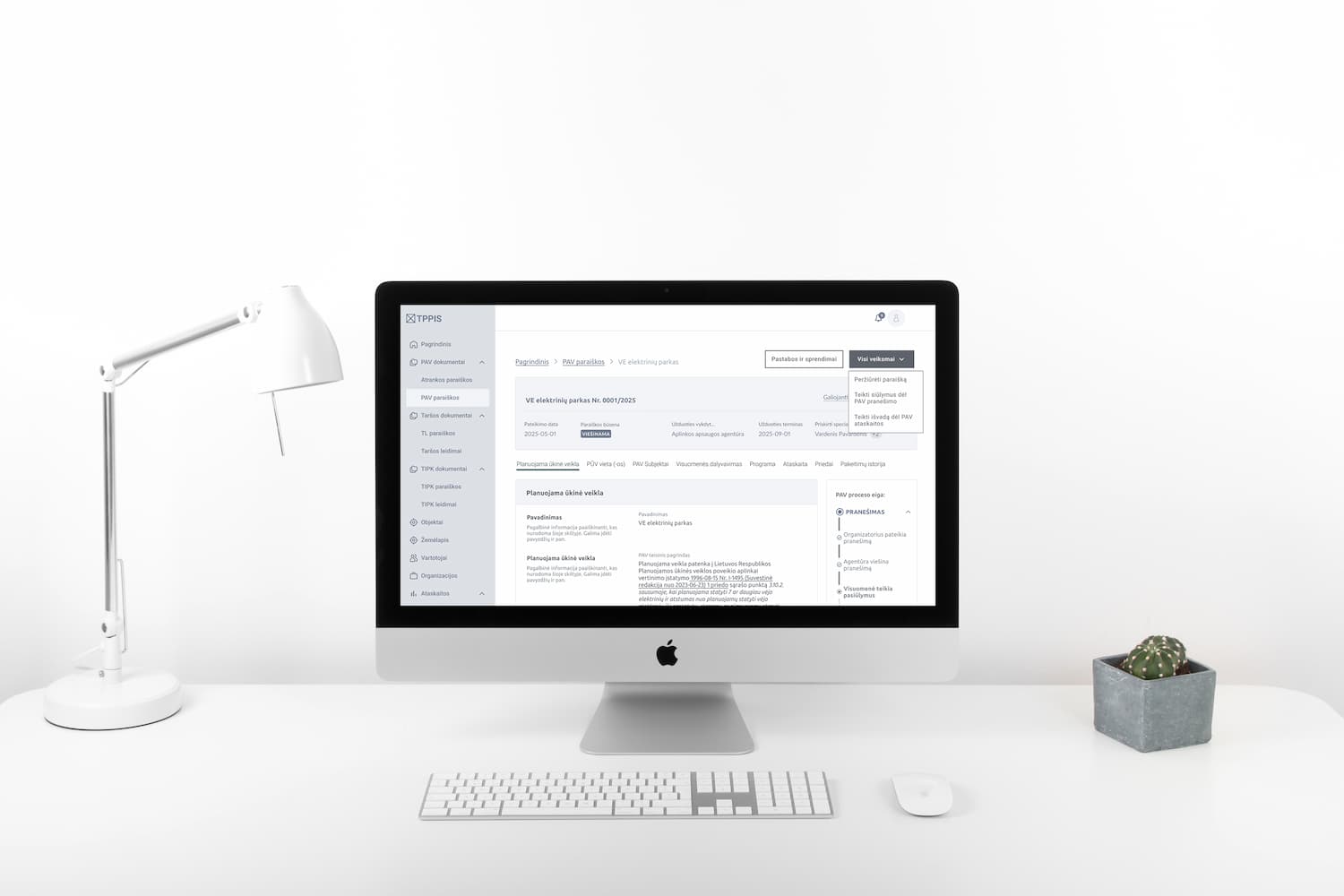
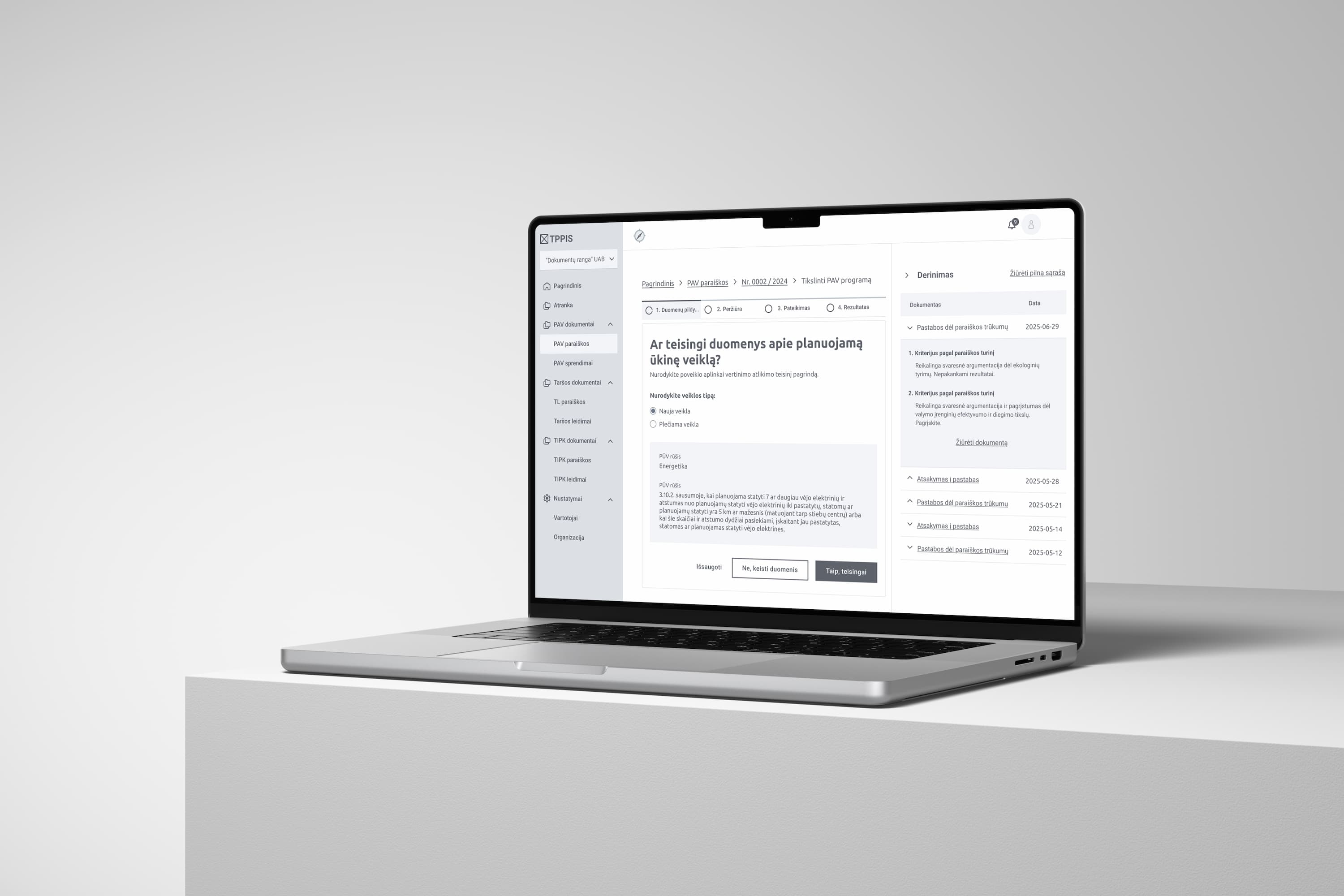
The centerpiece of the solution was the guided submission journey that acted as a Legal GPS, leading users through the labyrinth of environmental regulations with step-by-step clarity.
Optimised EIA proceses
2
Optimised PP Processes
1
Other Major Features
3
CHALLENGE
The Environmental Impact Assessment (EIA) process was a high-stakes, sophisticated ecosystem weighed down by regulatory density. I faced a dual-sided struggle:
The Applicant’s Hurdle: Companies and document preparers were drowning in a "legal labyrinth," struggling to submit correct documentation without getting lost in bureaucratic jargon.
The Evaluator’s Burden: On the other end, Ministry evaluators were forced to comb through a "huge amount of documents and excessive beletristics," making it nearly impossible to find the critical data needed for a decision.
The Core Problem: The process was entirely manual, based on "tribal knowledge," making it nearly impossible for a non-expert to navigate successfully.
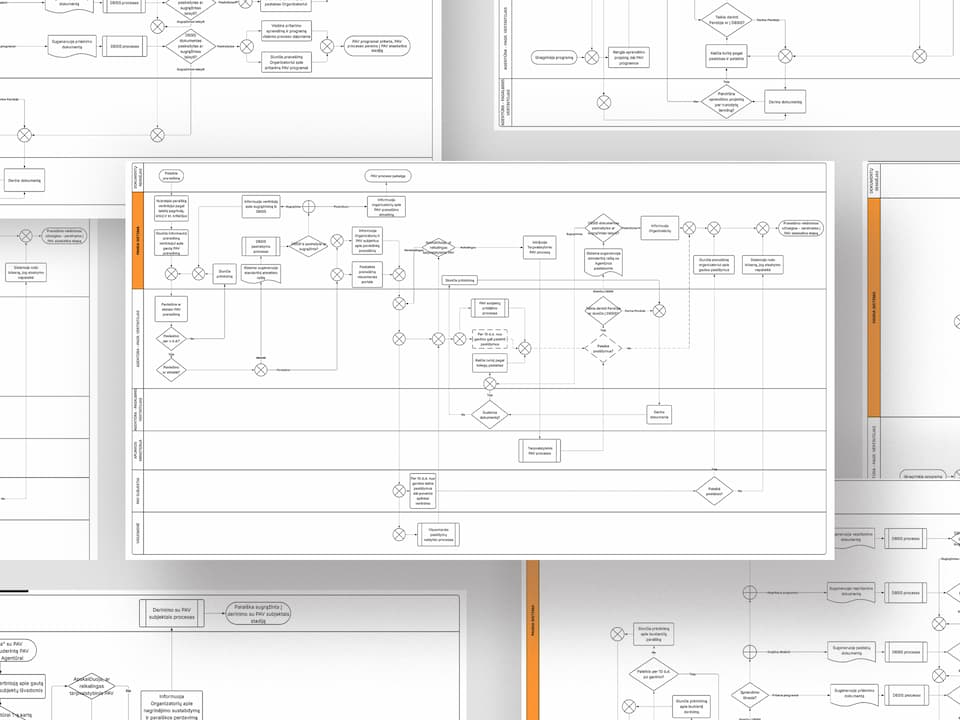
SYNTHESIS OF EXPERT KNOWLEDGE: PROCESS MAPPING
I spent the first phase of this project conducting deep-dive sessions with power users to deconstruct every manual step and unwritten rule. Together with the dedicated team, we did the heavy lifting of synthesising this fragmented expertise into a cohesive digital framework, ensuring the final UX was built on real-world workflows rather than just theoretical protocols.
Process Mapping: I deconstructed the cumbersome manual steps into a visual blueprint, identifying the "unwritten rules" that usually lead to document rejection.
Defining the Logic: I did the heavy lifting of synthesising fragmented expertise into a cohesive digital logic tree, ensuring the system was built on real-world workflows.
INNOVATION: THE GUIDED WIZARD FOR DOCUMENT SUBMISSION
Because the previous process was entirely manual, there were no baseline metrics to measure against. Impact was defined by creating the structured framework for EIA in Lithuania:
Guided Navigation: Instead of a static form, the "Guided" application leads the applicant through the legal requirements step-by-step. Together with the team, we've successfully translated a cumbersome, non-linear legal process into a linear digital workflow, making the law "navigable" for non-experts.
Conditional Logic: The system only asks relevant questions based on the specific project type, effectively shielding the user from the "labyrinth" of irrelevant clauses.
Reduced Fear Factor: By providing "guardrails," the guided application ensures that applicants feel confident they are fulfilling their legal obligations in real-time.
Cognitive Load Reduction: Eliminated the 'beletristic' overhead for evaluators by designing a UI that prioritises data points over prose, allowing for faster, more accurate assessments.
Zero-Error Design: Implemented a modular submission system that ensures 100% compliance with Ministry requirements before a document is even submitted.
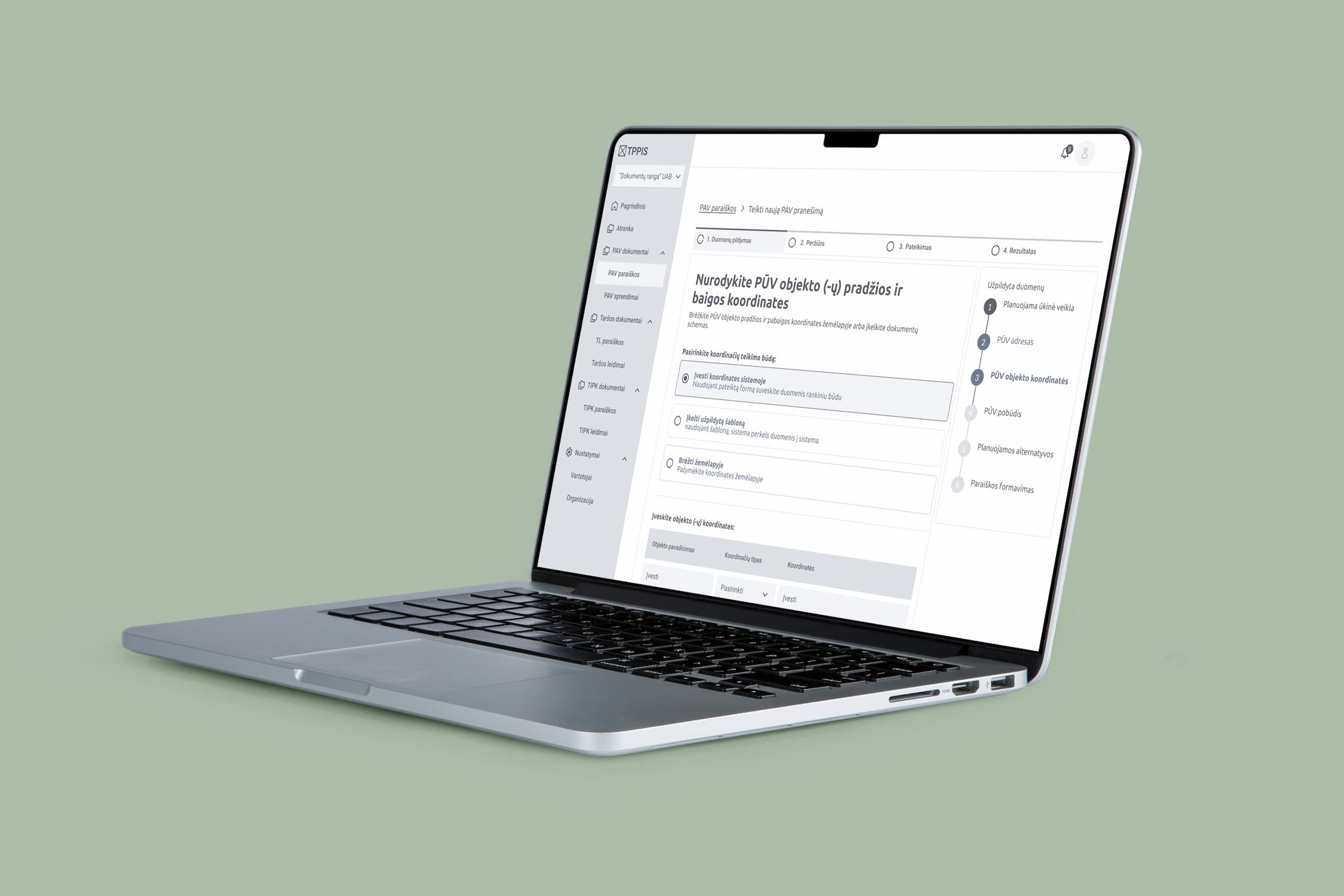
CREATING A "DATA FILTER"
I crafted UX wireframes that served as a filter to eliminate "beletristics" and prioritize clarity. Replaced 'legal guesswork' with automated guardrails. By designing a system that validates data in real-time, I eliminated the primary cause of document rejection: human error in interpreting complex law.
RESULT
The result - incredibly sophisticated, law-heavy processes distilled into an intuitive digital experience.
The Guided Wizard: Designed a guided journey that acts as a "Legal GPS," ensuring 100% compliance and user confidence.
Complexity Management: Successfully bridged the gap between hundreds of pages of fragmented protocols to a clean, usable interface.
Professional Collaboration: Facilitated a seamless exchange of knowledge with a highly professional Ministry team, turning abstract expertise into a concrete product vision.